











Ready to build a CRM that works the way your business does?
Hire a Dynamics 365 CRM developer from Vaden Consultancy and get a solution engineered around your data, your workflows, and your goals.
Scattered customer data, manual follow-ups, and disconnected sales, marketing, and service teams slow down every decision you try to make. A dedicated Dynamics 365 CRM developer fixes that at the source by building a CRM environment engineered around how your business actually operates.
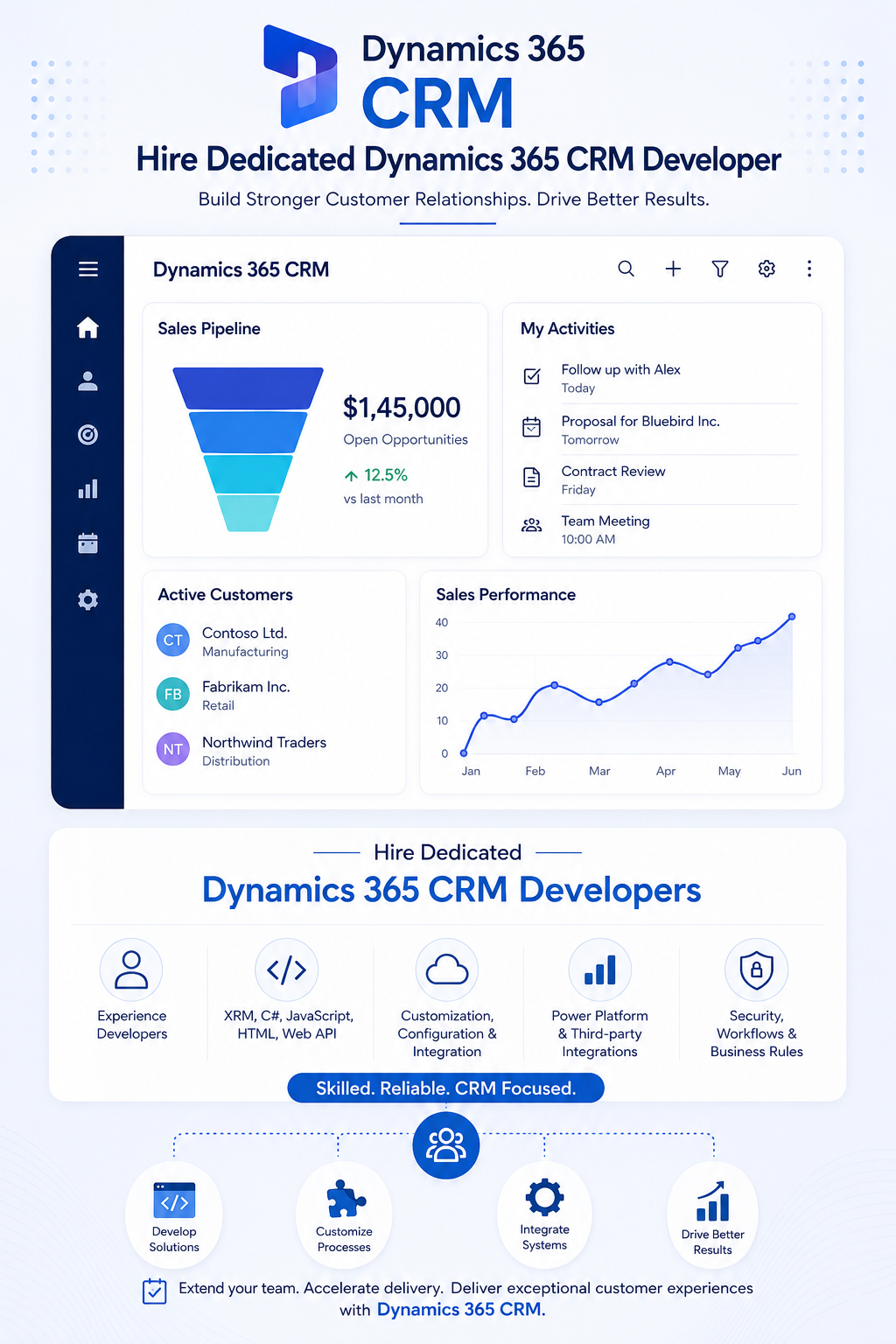
When you hire a Dynamics 365 CRM developer from Vaden Consultancy, you get a specialist who can:
Customize entities, forms, and views configure custom entities, business rules, and model-driven app forms so the CRM captures the exact fields and stages your sales process needs
Build Power Automate workflows automate lead assignment, approval chains, renewal reminders, and follow-up triggers using Power Automate flows and classic workflows, cutting manual data entry
Develop plugins and custom APIs write server-side plugins, custom workflow activities, and Dataverse Web API integrations for logic that out-of-the-box configuration can't handle
Integrate with Microsoft 365 and third-party systems connect Dynamics 365 CRM with Outlook, Teams, SharePoint, and external platforms (ERP, marketing automation, e-commerce) via connectors or custom middleware
Build Power BI dashboards and reports surface pipeline health, conversion rates, and service SLAs directly inside the CRM or in embedded Power BI dashboards
Manage security roles and data structure set up business units, teams, and field-level security so the right people see the right data, nothing more
The result: A CRM that runs quietly in the background, syncing data across Sales, Marketing, and Customer Service so your team focuses on customers not on reconciling spreadsheets.








Let’s Discuss Your Project Requirements
Get expert guidance in just three simple steps:
-
Create a Proposal
Request a tailored plan outlining project details, approaches, and cost estimates. -
Requirement Discussion
Share your unique ideas, objectives, and project needs with our consultants and experts. -
Initiate the Project
Begin executing the proposed plan to ensure project success!
Enjoy a free 30-minute consultation with us.